Showing posts with label science. Show all posts

a case of the wiggles...


what do you do when you have a class full of wiggle worms? play a game! i wrote the name of a person, place, or thing on a piece of paper, which i had the kids stick to their foreheads and figure out what their paper read, without peeking. 


sonny = luke skywalker. beckett = sonny...


coco = cat...


mia = cinderella...


and julian = bird. 


even though the game didn't help settle the kids down (which i didn't expect), it did help channel their energy into something that was both fun and that made them think.

which is heavier?


we experimented with water, oil and food coloring to discover which liquid is heavier and what happens when they are mixed together.


when the kids added food coloring to their mixture of water + vegetable oil, they were amazed to discover that while the food coloring mixed with the water, it did NOT mix with the oil! 


to demonstrate the effects of oil spills, we created a small ocean by adding feathers, shells, and plastic fish to blue water and then poured in vegetable oil. the kids observed that:

- the water and oil would not mix, no matter how fast or long we stirred
- the water stayed on the bottom and the oil stayed on top
- the feathers and shells got coated in oil
- nothing can drop into the water without getting oily

pretty amazing!

seed predictions...


our microbial zoo...


how do we know that microorganisms are all around us when we can't see them? since we don't have a microscope we created our own petri dishes to test various surfaces for microbes and to grow colonies that can be seen with the naked eye. 


first we made a microbial growth medium (water, gelatin, sugar and a bouillon cube) and brought it all to a boil. 


while we boiled our "germ food" we divided our petri dishes into four different sections to separate the four different surfaces we would test. we poured the mixture into our dishes and once it hardened we were ready to swab! we used clean q-tips to test hair, our faces, the doorknob, and lots of other great surfaces...


 next we gently rubbed the q-tip across the section we had labeled for that surface. then we closed the lids, put them in the window, and waited.


after a couple days we were able to see some fungi growing! 


we studied the changes and documented them in our journals.


we used this helpful diagram to study the form, elevation and margin of our fungi. 


by studying pictures of various molds and bacteria, we concluded that we had grown both green mold and pink yeast colonies! gross but super interesting!

raquel's visit.


raquel stopped by to teach us about yeast- making delicious pita bread in the process!


thanks again raquel!

an alternate view of the big dipper.


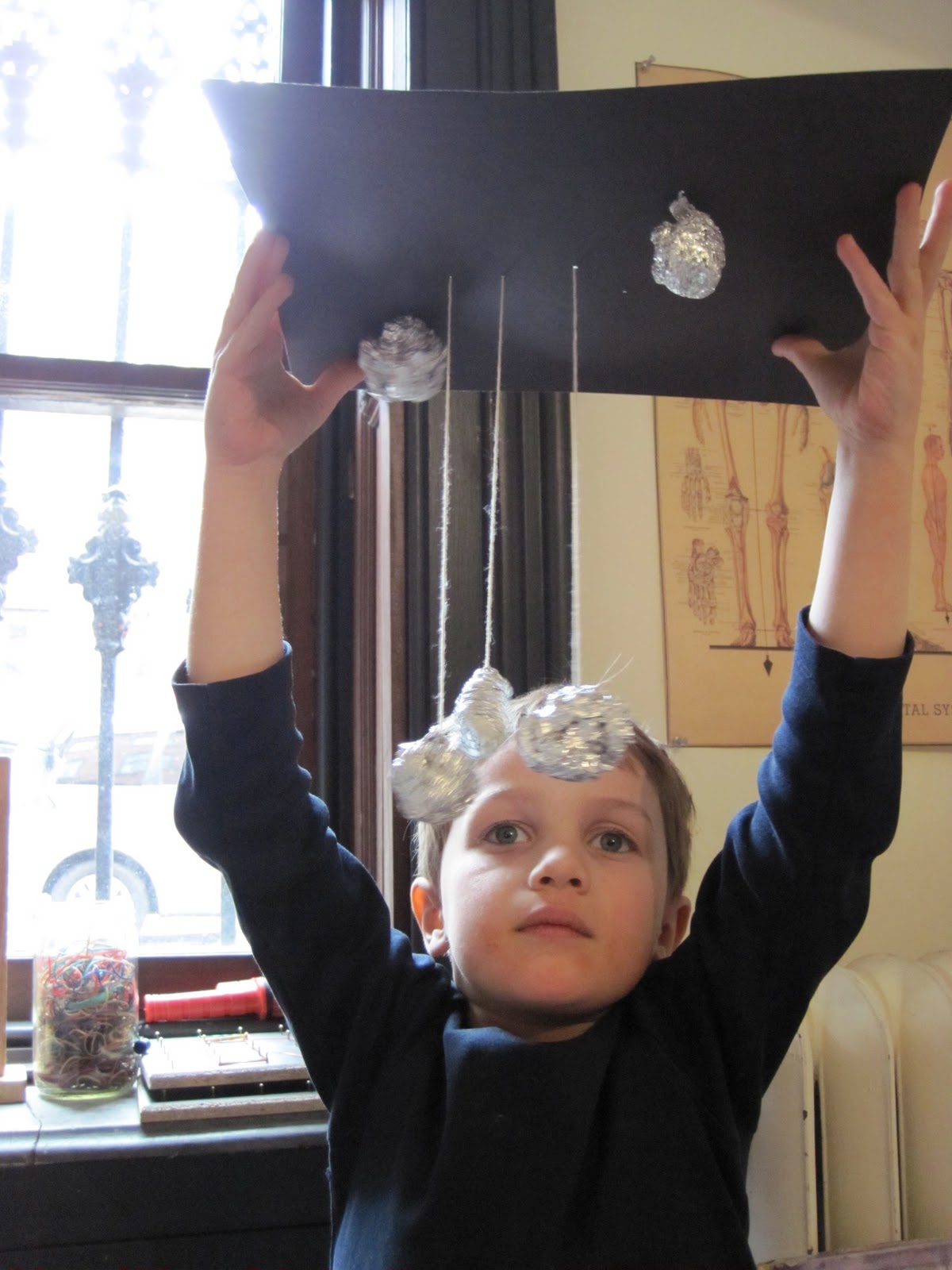
everyone knows what the big dipper looks like from earth, but what does it look like from different angles in outer space? in order to find out we made our own 3-D mobile with some construction paper, string and tinfoil. we used 6 inch squares of foil and wrapped them around pieces of string, forming 7 balls representing the stars of the big dipper. we figured out how long each piece of string should by using a chart (from here) and then attched them to a piece of black construction paper. after making our mobile we were able to get a side view and discovered that some stars are closer to the earth while others are further away. 

more kitchen science.


what makes yeast grow? we did several experiments testing which ingredients make yeast grow best. we labeled 4 baggies as follows: 

sugar + warm water 
sugar + cold water 
sugar + salt + warm water
no sugar + warm water

we added a package of yeast to each plastic bag, 2 tsp. of sugar to each of the bags that required sugar, and 1 tsp. of salt to the bag that said salt. afterwards we added 1/2 cup water to each baggie. we sealed the bags, squeezing out as much extra air as possible and let them sit. 


a short while later we found some of the bags had puffed up! once again we made carbon dioxide! when growing yeast cells eat starch they make a gas (carbon dioxide) that form lots of tiny bubbles, which pop during baking- leaving tiny holes in the bread.


the kids recorded the results of their baggie experiment in their journals.